Rehan Ahmed's All-Round Talent: A Semi-Final Selection Gamble for England?
The T20 World Cup is reaching its exhilarating climax, and as England prepares for a high-stakes semi-final clash, one name dominates the selection debate: Rehan Ahmed. The 21-year-old all-rounder delivered a scintillating performance against New Zealand, making an immediate impact on his World Cup debut with both bat and ball. His heroics have undoubtedly presented a delightful yet challenging dilemma for England’s coaching staff and captain. The question on every fan's lips is whether Rehan Ahmed's all-round talent is enough to secure an
Ahmed semi-final place, especially when considering the vastly different conditions awaiting them in Mumbai.
Ahmed's electrifying display in Colombo saw him take a wicket with his very first World Cup delivery, setting the tone. He then followed up with a crucial, unbeaten 19 runs off just seven balls, including two massive sixes, to guide England to a thrilling victory with three balls to spare. This performance not only solidified England's unbeaten run through the Super 8s but also ignited a passionate discussion about his potential inclusion in the semi-final XI. However, as Ahmed himself humbly acknowledges, team selection for a World Cup semi-final is far from a personal endeavour; it's a cold, calculated decision aimed at fielding the best possible team to win.
The Colombo Catalyst: Ahmed's Heroics and Impact
Rehan Ahmed's performance against New Zealand was nothing short of a game-changer. Thrust into the spotlight on his World Cup debut, the young leg-spinner immediately justified his inclusion. The turning conditions in Colombo were tailor-made for spin, and Ahmed seized the opportunity with both hands. His maiden World Cup wicket – a testament to his talent and temperament – was just the beginning.
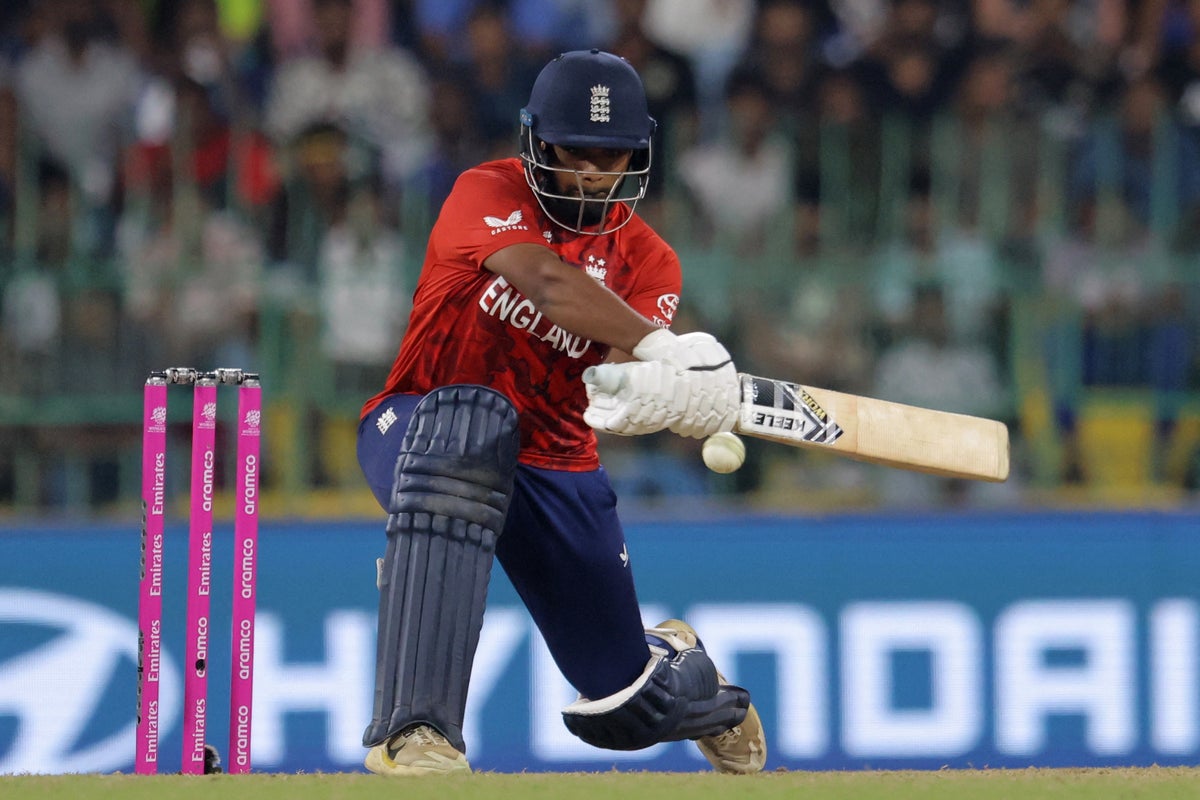
However, it was with the bat that Ahmed truly cemented his "man of the moment" status. Chasing a competitive total, England found themselves in a precarious position in the final overs. Enter Ahmed, who, with an audacious display of power-hitting, turned the tide. His second ball faced was dispatched for a towering six, igniting the chase. He followed this up with a fine reverse sweep off Mitchell Santner for four and another colossal six over long-off. This late blitz not only showcased his aggressive batting prowess but also his ability to perform under immense pressure. His 19 not out from just seven deliveries ensured England progressed unbeaten, a testament to his crucial impact. This performance has naturally led to fervent calls for him to retain his
ahmed semi-final place.
Mumbai's Wankhede: A Different Proposition for Selection
While Ahmed's heroics were celebrated, the tactical complexity surrounding his selection for the semi-final against likely co-hosts India or West Indies is significant. The crucial factor lies in the venue: Mumbai's iconic Wankhede Stadium. Unlike the spin-friendly tracks of Colombo, Mumbai's pitches are renowned for being truer surfaces, often offering a more balanced contest between bat and ball, and crucially, between pace and spin.
The reference context highlights that "returns of pace bowlers and spinners have been far more balanced at Mumbai's Wankhede Stadium, compared with Colombo where spin has dominated." This shift in pitch dynamics is pivotal. In a scenario where pace and seam movement might play a more significant role, England's team management, led by coach Brendon McCullum and captain Harry Brook, will need to weigh their options carefully.
*
Pitch Analysis: Mumbai often produces high-scoring encounters, with good bounce and carry, aiding fast bowlers who can extract pace and seam. Spinners still have a role, but rarely do they dominate to the extent seen on some subcontinental pitches.
*
Tactical Implications: England might feel the need to bolster their pace attack. With Jofra Archer and Sam Curran as their primary pace options, the absence of an additional specialist seamer could expose them, especially if Jamie Overton doesn't return to the XI. This could mean a difficult choice between an extra pace option and a spin-bowling all-rounder like Ahmed.
This fundamental difference in pitch conditions is the primary reason why Ahmed, despite his outstanding performance, is playing down his chances for an
ahmed semi-final place.
The Selection Conundrum: Bowling and Batting Balance
Fitting Rehan Ahmed into England's semi-final team in Mumbai presents a multifaceted challenge, impacting both the bowling attack and the batting order.
Bowling Debate: Ahmed vs. Rashid vs. Dawson
Ahmed’s bowling against New Zealand was effective, yielding 2-28 and claiming the crucial wickets of Rachin Ravindra and Cole McConchie. However, a deeper analysis reveals a nuanced comparison with England's established leg-spinner, Adil Rashid. Data from CricViz indicates that Rashid had significantly better control of length and generated more missed or edged deliveries (nine vs. Ahmed's two). Rashid has been England's first-choice leg-spinner for a long time, and his experience and control are invaluable in high-pressure situations.
Furthermore, Liam Dawson provides a different dimension of spin, offering superb control to Brook throughout the tournament. In conditions that might not be overtly spin-friendly, control and experience often take precedence over potential X-factor, especially in a semi-final. If England deems only one or two specialist spinners are required for Mumbai, Ahmed, despite his recent heroics, might find himself behind Rashid and Dawson in the pecking order. This makes the competition for an
ahmed semi-final place particularly fierce in the bowling department.
Batting Order Implications
Ahmed's crucial batting performance against New Zealand raises the possibility of him batting higher up the order. However, this is far from straightforward. He has most regularly batted at number three in domestic cricket, a position currently occupied by captain Harry Brook. Beyond that, most of his experience has been at seven or eight.
*
Top Order Restructure: Pushing a specialist opener like Tom Banton or Jacob Bethell further up and slotting Ahmed into the middle order (e.g., at number 4 or 5) would be a significant gamble. Such a move would be backed by little evidence from his international career and could disrupt the settled batting rhythm.
*
Flexibility vs. Stability: While Ahmed offers genuine all-round capabilities, disrupting a batting lineup that has largely performed well for the sake of an additional lower-order hitter, even a brilliant one, might be seen as an unnecessary risk in a semi-final. The management might prefer stability and proven roles over experimental changes.
Rehan's Mature Perspective and the Team Ethos
What stands out amidst this selection debate is Rehan Ahmed's remarkable maturity and team-first attitude. "I'm not too bothered about my place in the team," he stated after his match-winning performance. He trusts the leadership of Brendon McCullum ("Baz") and Harry Brook ("Brooky") to "definitely put out the best team they think is going to win."
His perspective perfectly encapsulates the ethos of the current England white-ball setup:
* "It's not a personal thing for me - it's a World Cup, it's my first World Cup to be in."
* "I'll just keep enjoying the ride, if I get the nod I'll play and if not then I'll give water to the boys."
This humble and selfless approach speaks volumes about Ahmed's character and his understanding that individual accolades, while gratifying, are secondary to team success, especially in a World Cup. His readiness to contribute in any capacity, whether on the field or off it, reflects the strong team culture fostered by McCullum and Brook.
Conclusion: A High-Stakes Decision for England
The decision surrounding Rehan Ahmed's
ahmed semi-final place in the T20 World Cup semi-final is undoubtedly one of the toughest England's management will face. On one hand, his recent heroics against New Zealand showcased his immense talent, X-factor, and ability to perform under pressure – qualities invaluable in knockout cricket. His all-round potential, particularly his aggressive hitting, offers a genuine advantage.
On the other hand, the tactical nuances of playing at Mumbai's Wankhede Stadium, with its truer pitches favoring a more balanced attack, cannot be ignored. The competition for spin spots with the experienced Adil Rashid and the controlled Liam Dawson, coupled with the potential need for an extra pace option, makes his inclusion a genuine gamble. Furthermore, slotting him into the batting order without disrupting established roles presents its own set of challenges. Ultimately, McCullum and Brook must weigh the undeniable impact of Ahmed's all-round talent against the optimal team balance for the specific conditions of a World Cup semi-final. Whatever their decision, it will be a high-stakes call aimed at giving England the best possible chance to clinch a spot in the final.